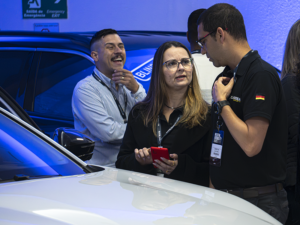


A Hyundai Motor Brasil (HMB) ampliou as opções de escolha na sua linha HB20. O compacto de origem coreana já era disponibilizado com as motorizações 1.0 e 1.6, ambas aspiradas e com 80 e 128 hp de potência, respectivamente. Agora, o fabricante passará a ofertar (a partir do dia 26 de abril) uma terceira – e interessantíssima – versão com propulsor 1.0 turbo com 3 cilindros e 105 cv de força.

Onde está a crise? O HB20 comeu! >> O sonho de qualquer montadora de veículos é criar um projeto que já se mostre vencedor desde o início. Costumo dizer que carro é igual a restaurante: pode até ser bom, mas ´se não pegar…´, se não cair nas graças do povo, já era. A HMB está instalada no país há pouco mais de três anos no município paulista de Piracicaba. Nesse momento, provavelmente, é a única marca atuante no Brasil com funcionamento de fábrica em três turnos. Constrói por lá somente a família HB20 e tem capacidade anual de 180 mil carros. Em três anos já pariu mais de 500 mil unidades desse sucesso de vendas que hoje é o segundo automóvel mais comercializado no mercado nacional. Numa ótima fase, a Hyundai fechou o mês de março de 2016 com 9,9% do mercado, posicionando-se apenas atrás da Fiat, Chevrolet e da Volkswagen.

A novidade >> Nos quatro cantos do planeta a tendência do ´downsizing´ cresce em ordem exponencial. A ideia é muito simples: com um bloco muito menor (inclusive com o número de cilindros reduzido) e equipado com um turbocompressor, consegue-se extrair quase a mesma potência de motores grandes, só que, com duas vantagens; a redução do consumo de combustível e a diminuição das emissões, este último, um assunto muito sério nos países de primeiro mundo. Posicionado entre as unidades 1.0 e 1.6 aspiradas, o novo motor Kappa 1.0 turbo de 3 cilindros e 105 hp é um primor de engenharia: vibra pouco, é econômico e tem um casamento extremamente bem sucedido com o câmbio manual de seis marchas.

Briga boa >> Durante a apresentação do veículo nesta terça-feira (12/4) para a imprensa brasileira, a marca coreana enfatizou muito claramente quais serão os concorrentes do novo HB20 turbo. A briga será contra o Ford KA (1.5), Fiat Palio (1.0 e 1.6), VW Gol (1.6), Toyota Etios (1.3 e 1.5) e, principalmente, contra o hatch Ônix e o sedã Prisma, ambos da Chevrolet. O HB20 turbo será, também, comercializado nas versões hatch e sedã.

Tecnologia >> O motor turbo do HB20 não é ´apenas´ uma unidade Kappa normal 1.0 de 3 cilindros com uma turbina acoplada. A engenharia da Hyundai foi fundo no projeto. O propulsor flex tem comando de válvulas duplo e variável, bloco e cabeçote em alumínio e teve vários componentes redimensionados e reforçados para suportar o torque e a potência maiores. O modelo ganhou um turbo de baixa inércia composto basicamente de uma liga de níquel. Esse minúsculo caracol da alegria tem apenas 3,4 centímetros de diâmetro, mas faz uma diferença incrível! Sua condição de trabalho suporta até 280 mil RPM (rotações por minuto) de carga máxima. Um detalhe mecânico muito interessante é que a turbina é fixada diretamente no cabeçote do motor, gerando um ´tempo de enchimento´ mais rápido e uma fase fria do motor, do turbo e do intercooler, mais curta e menos fatigante para a unidade.

Impressões gerais >> Tenho 100% de certeza de que esse novo carro irá canibalizar o próprio ´irmão´ HB20 1.0 aspirado. Quem fizer o test-drive dos dois no mesmo dia, não vai se importar em pagar os R$ 3.700 extras de diferença entre eles, porque o comportamento da versão turbo é excepcionalmente mais interessante. Pisei fundo (no autódromo de Interlagos) e três detalhes me impressionaram nesse compacto: 1) O bom padrão de acabamento; 2) O baixo nível de ruído; e 3) A junção exata do motor turbo com uma elástica, surpreendente e deliciosa caixa de marchas. Para beneficiar a economia, as relações são propositalmente mais longas e esse detalhe, quando usado esportivamente é agradabilíssimo. O limite dele vai quase aos 7.000 giros e o conjunto todo agrada muito. A ergonomia é impecável e a resposta da direção hidráulica, suspensões e freios parecem uma orquestra sinfônica alemã em dia de apresentação após dois anos de ensaios. No frigir dos ovos, ele oferece ótimo consumo com uma condição de dirigibilidade positiva.

Preços e versões >> O modelo será ofertado nas seguintes configurações: Hyundai HB20 turbo hatch Comfort Plus (R$ 47.445); HB20 turbo hatch Comfort Style (R$ 51.595). HB20 turbo sedã Comfort Plus (R$ 51.475) e HB20 turbo hatch Comfort Style (R$ 55.225). Os preços sugeridos tem como base o mercado de São Paulo, sem frete ou taxas de seguros. O valor adicional para a pintura metálica é de R$ 1.100 e a garantia geral do modelo é de 5 anos. Esteticamente, nada mudou em relação às versões atuais, apenas a identificação “turbo” com logomarca fixada na tampa traseira do novo compacto. (Fotos: divulgação Hyundai //// Below, translated text in english)

At the time of downsizing, Hyundai motor 1.0 turbo in compact adopts HB20 >> The Hyundai Motor Brazil (HMB) has expanded the options of choice in his line HB20. The compact of Korean origin was already available with 1.0 and 1.6 powertrains, both sucked and with 80 and 128 horsepower, respectively. Now, the manufacturer will offer (from 26 April) a third – and interesting – 1.0 turbo booster version with 3 cylinders and 105 HP.

The novelty >> In the four corners of the planet ´ downsizing trend ´ grows in exponential order. The idea is very simple: with a much smaller (even with the reduced number of cylinders) and equipped with a turbocharger, you can extract almost the same power of large engines, just that, with two advantages; reducing fuel consumption and the reduction of emissions, the latter, a very serious matter in first world countries. Positioned between 1.0 and 1.6 aspirated units, the new Kappa engine 1.0, 3 cylinder turbo and 105 hp is a masterpiece of engineering: vibrates a little, is economical and has a extremely successful marriage with the six-speed manual exchange.

Good fight >> During the presentation of the vehicle on Tuesday (12/4) for the brazilian press, the Korean brand emphasized very clearly what are the competitors of the new turbo HB20. The fight ill be against the Ford KA (1.5), Fiat Palio (1.0 and 1.6), VW Gol (1.6), Toyota Etios (1.3 and 1.5) and, especially, against hatch Onyx and the Prism sedan, both from Chevrolet. The HB20 turbo ill be also marketed in hatch and sedan versions.

Technology >> The turbo engine is not just ´ HB20 ´ a unit normal of 3-cylinder 1.0 Kappa with a turbine coupled. Hyundai Engineering was bottom in the project. The flex has dual camshaft and variable block and aluminum head and had several components resized and reinforced to withstand the torque and higher power. The model won a low-inertia turbo composed primarily of a nickel. This tiny snail of joy is only 3.4 centimeters in diameter, but makes an amazing difference! Its work supports up to 280.000 RPM (revolutions per minute) maximum load. A very interesting mechanic detail is that the turbine is mounted directly on the engine head, generating a filling time faster and a cold phase of the engine, turbo and intercooler, shorter and less stressful for the unit.

General impressions >> I’m 100% sure this new car will cannibalize his own ´brother´ HB20 1.0 sucked. Who do the test drive of both on the same day, won’t mind paying the extra R$ 3.700 difference between them, because the behavior of the turbo version is exceptionally interesting. Stepped bottom (in racetrack Interlagos) and three details impressed me in this compact: 1) the proper standard of workmanship; 2) the low level of noise; and 3) the exact junction of the turbo engine with an elastic, amazing and delicious gearbox. To benefit the economy, relationships are purposely long and this detail when used sportily is pleasant. The limit will almost 7.000 rpm and the whole like. Ergonomics is impeccable and the response of the hydraulic steering, suspension and brakes seem a german symphony orchestra in presenting day after two years of trials. In the sizzling eggs, it offers great consumption with a positive driving condition.

Prices and versions >> The model will be offered in the following configurations: Hyundai turbo hatch HB20 Comfort Plus (R$ 47.445); HB20 turbo hatch Comfort Style (R$ 51.595). HB20 turbo sedan Comfort Plus (R$ 51.475) and HB20 turbo hatch Comfort Style (R$ 55.225). The suggested price is based on the São Paulo market, without shipping or insurance charges. The additional value to the metallic paint is R$ 1.100 and the general guarantee of the model is to 5 years. Aesthetically, nothing has changed in relation to current versions, only the id “turbo” with logo attached on the back cover of the new compact.